

By SPARC , December 2025.
Since 2023, SPARC began sharpening and deepening its focus on health via exploring the idea of creating community health committees and strengthening them over time to take up health action in their neighborhoods. The action has a simple goal, the neighborhood insights and knowledge around elements of health and its social determinants of health are deepened. Communities learn which are the set of things for good health that they can do themselves within their neighborhoods and which things require seeking accountability from their duty bearers. All activities around capacity building engage the committees in an action learning fashion where they learn by being active participants in the process.
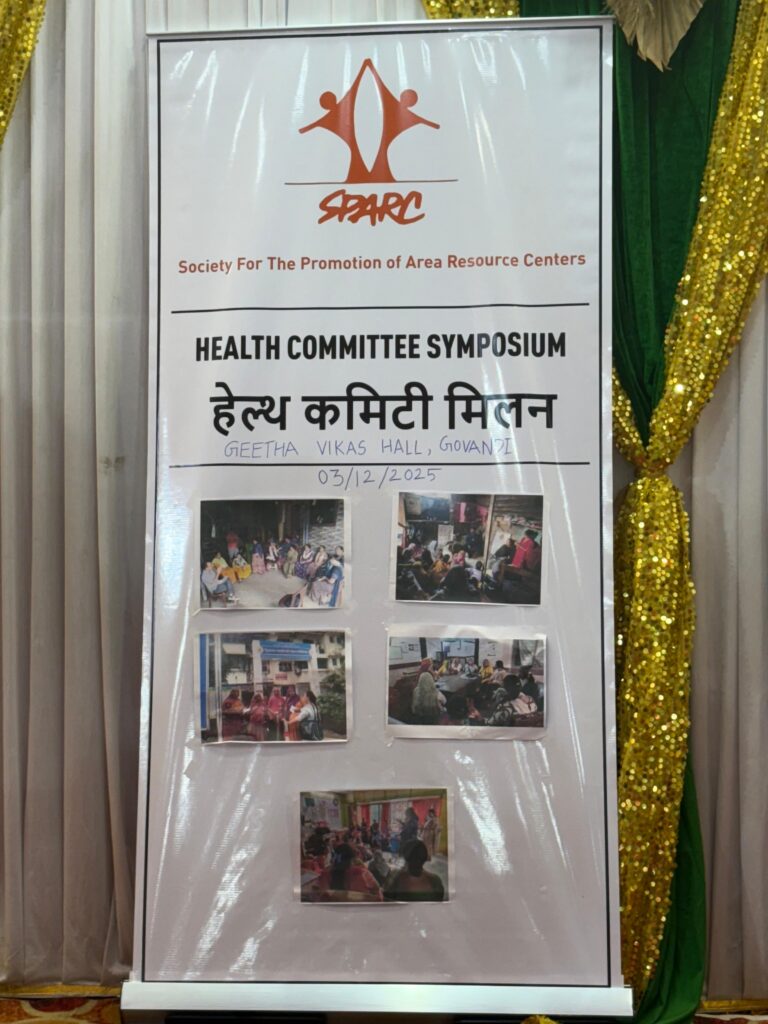
In the period of 18-20 months, many committees were formed, some committees flourished but some dropped over time due to various reasons. In December 2025, the project team decided to invite members from the currently active health committees, and women from other neighborhoods that are interested to form their own committees and the symposium finally took place on 3rd December 2025, in Govandi, a suburb in Mumbai.
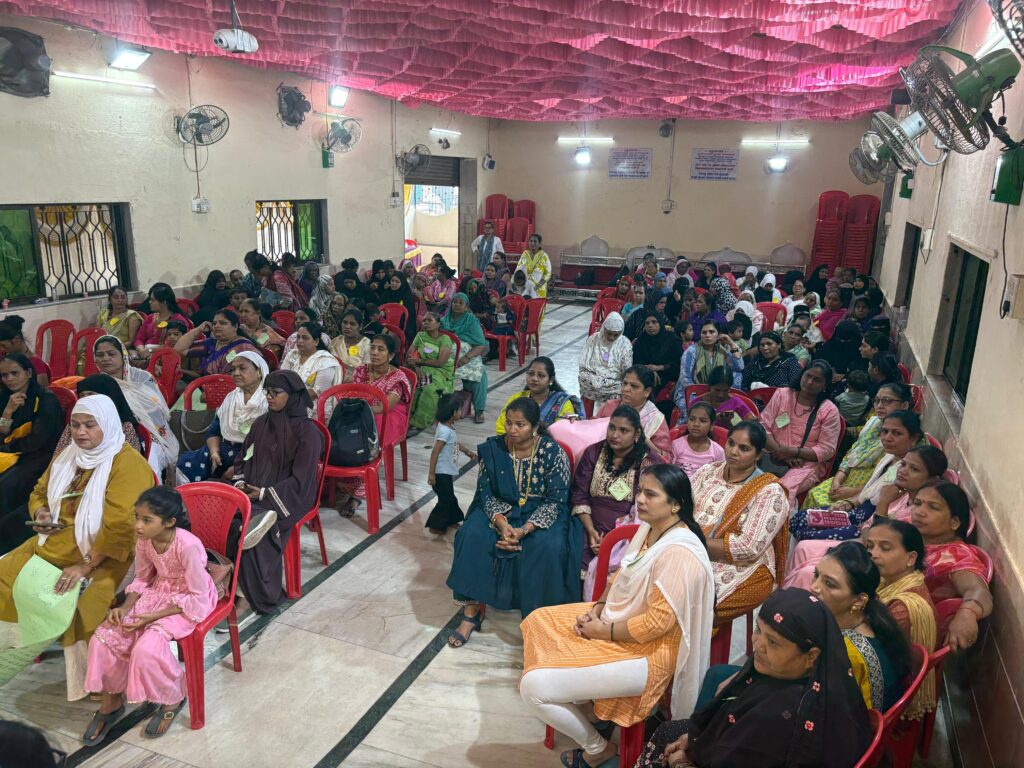
Close to 200 women across 15+ committees came together to share what their group has been doing so far, where do they stand as of now, what they plan to do next. They shared on what issues they need assistance from the groups and from the facilitators. As they waded through the interventions, everyone felt that the range of possible interventions was much wider as a consortium than their own experience. Therefore they believed that their collective representation and collaboration made it more effective while representing withing the neighborhood as well as when dealing with any external institutional arrangements.
Most elements of the committee’s work were not necessarily direct health interventions, but made a huge impact, indicating the concept of the social determinants of health as an important area to focus on.
When each group shared what they are doing, it became clear to everyone on the range of things happening within different localities and how they are contributing to the overall strengthening of the committees and their communities.
Many shared how they got their gutters cleaned, of how they were able to negotiate for actual implementation of water supply improvement. Inadequate infrastructure is a long pending issue in their localities, and in fact most committee formations bank on their ability to address their infrastructure deficits first. Issues such as poorly kept public toilets, uncollected garbage and how their process addressed those issues were all shared. While some issues were resolved, and some still remain unresolved, what was significant was that they had made a connection between their environmental challenges and their health and were able to articulate examples of impact and how their collective representation and action made the difference.
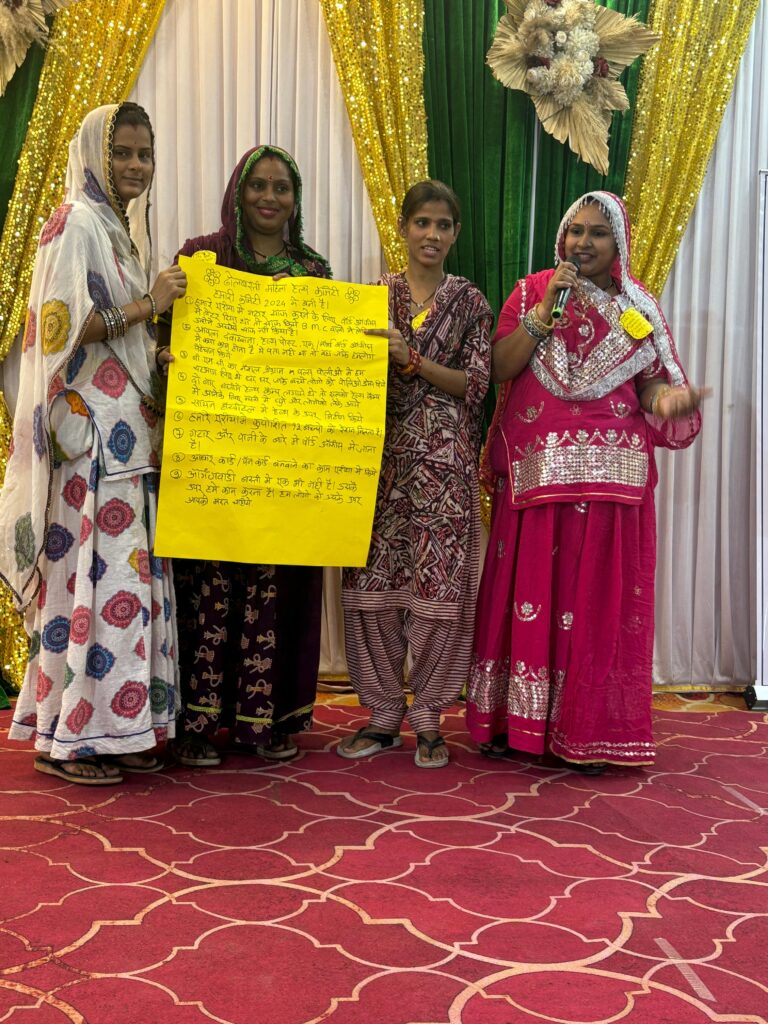
One issue the committees talked about was the inadequacy and sometimes absolute absence of Anganwadi and the absence of adequate ASHA worker engagements in their slums. They were aware of the role of Anganwadi in reducing child malnutrition and helping with institutional deliveries of women in their community. They shared how their committees are trying to improve that access. Many also shared the issues of residents not having proper documentation such as ration cards, adhar cards, birth certificates etc., and their resolve to get them sorted for their residents.
Many committees reported about the value they saw the medical camps brought in their area. It was warming to see that, the camps were seen beyond their usual charitable contribution. They were seen making the communities aware of the health issues in their neighborhood, understand how diagnostics are important to catch issues early and the data collected from the camp can be used to produce action around health issues in their community. Annual health checkups would mean identifying disease burdens in the community and a mechanism to track them.
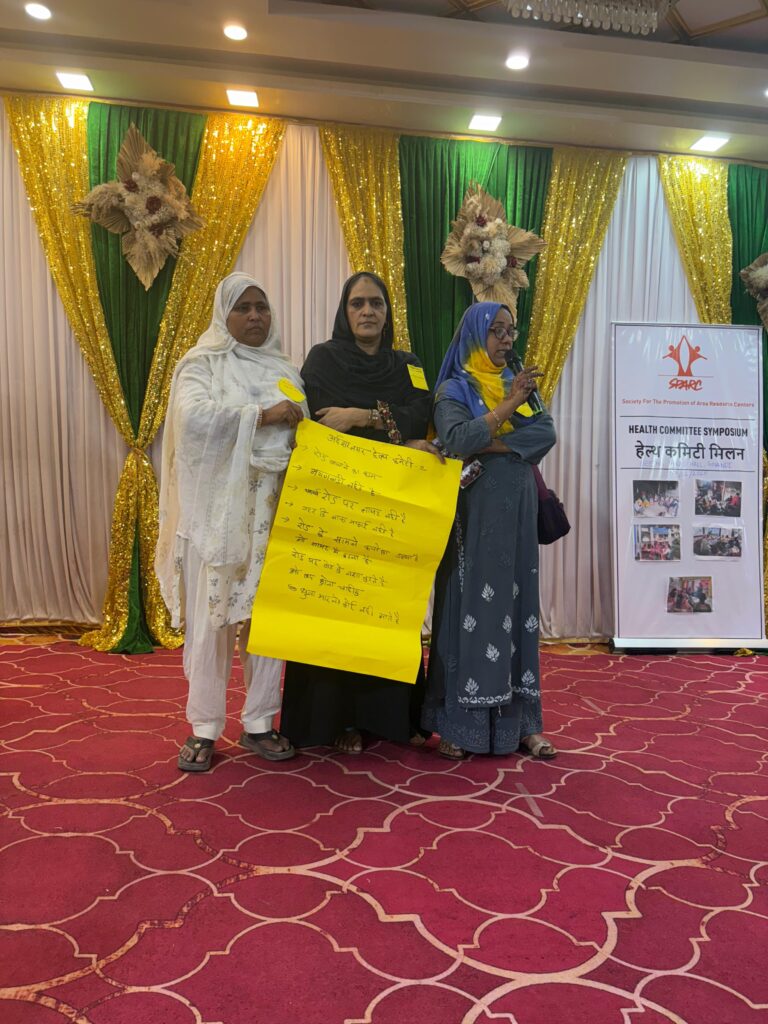
The greatest validation of this approach was that, all the groups learnt from each other and wanted a yearly event like this. They resolved to present what they had learned and to get inspired by solutions that others had taken up. They felt being a part of a larger community of action that inspire them to sustain their work within their neighborhoods and explore engagement with health institutions in their neighborhoods
The event ended with the committees resolving to work on a set of issues and reporting back at the next symposium. This blog will continue with updates from the next symposium!