

Authors: Shayari Nag, Sweta Dash, Pushpa V and Menaka M B - The George Institute for Global Health
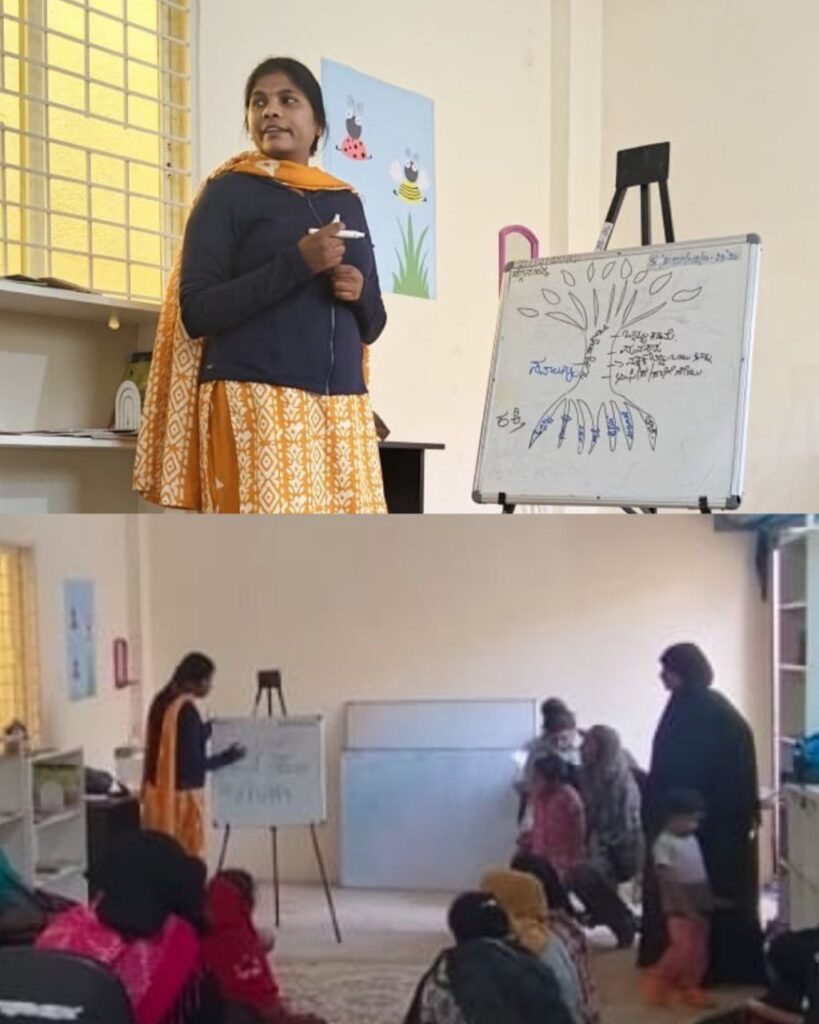
In December 2025, the TGI COMPLUS Team engaged 17 of its MAS groups in a thematic discussion titled: Assessing Our Strengths, Challenges, and Opportunities.
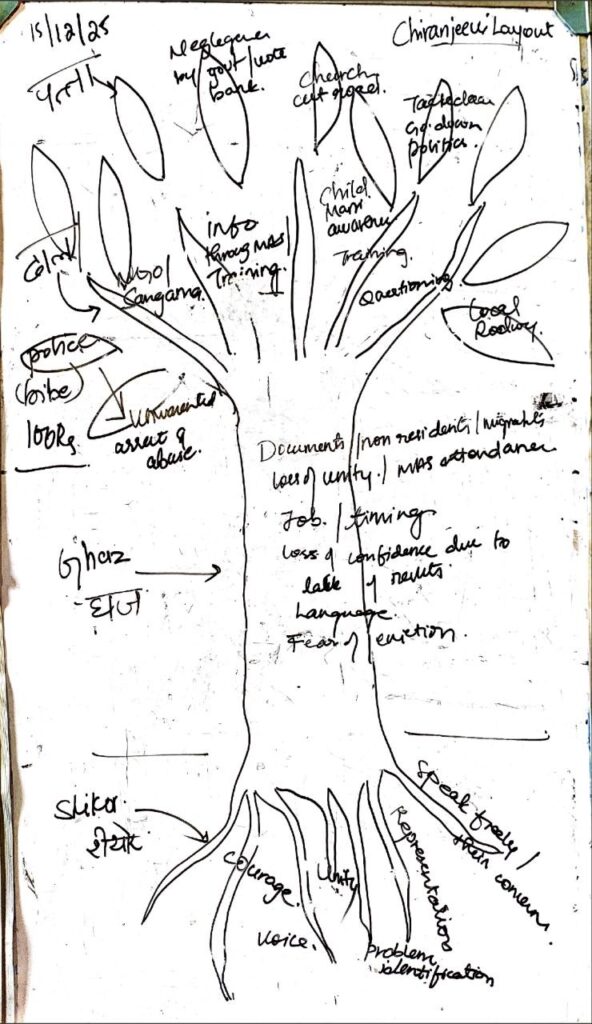
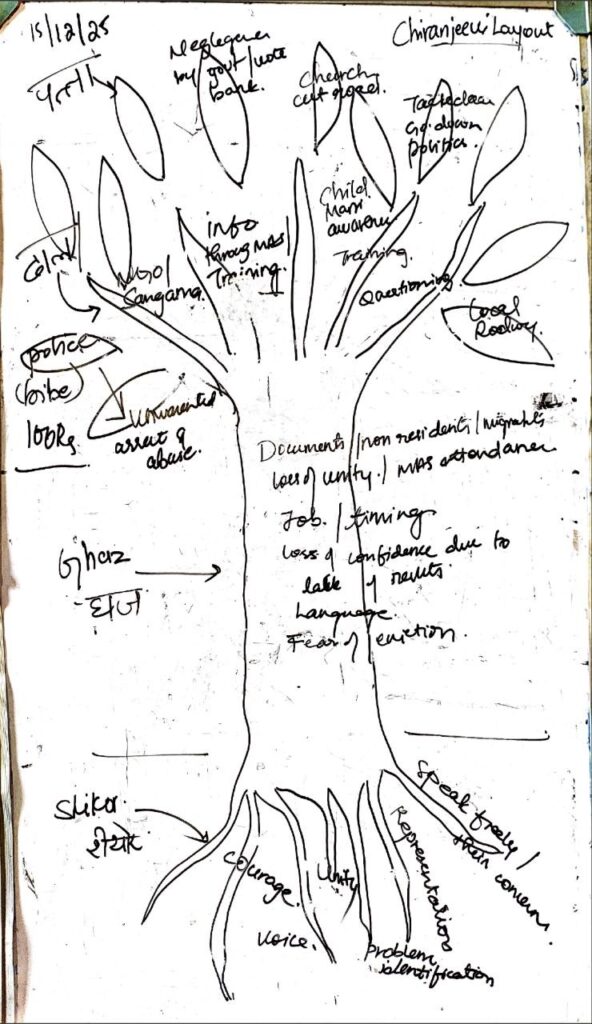
To visually facilitate a collective self-assessment, we encouraged them to reflect using a metaphor of a tree. The groups were asked to think of their roles, responsibilities, experiences, and aspirations with their MAS groups as a tree with each part signifying the following:
- Roots – representing the inner strengths that ground them,
- Trunk – acknowledging weaker spots,
- Branches – to reach for opportunities, and
- Leaves – identifying their external threats to build more resilience against the strong winds.
This visual metaphor guided the groups to define what they excel at and where they struggle, alongside the external environment, including new opportunities and potential threats that they may face in their participatory and advocacy efforts of their respective MAS groups.
Through this activity, MAS groups highlighted their key strengths:
- Identifying local community issues and voicing them in monthly meetings (mentioned 12 times),
- Mobilising collective action on common concerns (mentioned 11 times)
- Improved confidence in engaging with authorities ( noted 11 times).
As one member from MAS Group 12 stated, “We know exactly what problems exist in the place where we live, and we speak about them.” Community participation is most effective when members recognise that local issues can be solved through collective action, and confidence is essential for formal advocacy.
At present, tangible pain points common to most of the MAS groups, such as water and land rights, have been the most effective in bringing together MAS members, their families, and local leaders. A member from Group 9 said, “Whatever misunderstandings we have, when it comes to a task, we all unite; that is what is needed.” In our work with these groups over the last two years, through repeated mechanisms of grievance addressal and accountability-seeking, we have managed to address several concerns in this direction. For instance, together we have been able to start a new aanganwadi centre in Pillanganahalli, handle water provision issues in Hegganahalli, road issues in Rajagopala Nagar, and more. In doing so, we have moved forward in further strengthening people’s desire for and motivation towards effective community participation in the urban health system. And, it is these immediate, critical issues that have helped the group gradually move toward broader topics like health policy and system-level advocacy.
External Support, such as information and guidance from partner organisations (highlighted 11 times) and support from PHCs, ASHA, SHGs, and local community groups, is highlighted as vital for facilitating MAS and supporting the issues addressed through MAS. However, it also highlights a potential dependency: “If the Sangama organisation weren’t there, we wouldn’t have spoken this much; it is providing us with different types of training and information regarding education, schemes, health, women and children, and title deeds are being received” suggesting the need to reflect on how the advocacy MAS groups will sustain their activities if this external support were to decrease in the future.
Despite their strengths, the groups face external and internal hurdles that hinder their functioning.
Women highlighted reduced attendance (mentioned 9 times) due to personal responsibilities. As members from Group 5 explained, “Many people used to come to meetings initially, but the numbers decreased over time… Personal work comes up, the population (attendance) is low.” Participation is often hindered by economic and time constraints, as well as family members questioning the usefulness of the meetings (noted 9 times). One member from Group 9 shared their family’s opinion, “Why do you go there? What comes of that meeting? Is it possible for you to do what we haven’t been able to do all these years?” These conversations further corroborated the gendered nature of community participation, wherein women’s time use is always already under question from different fronts. Their household members often tend to assume their time is better spent at home conducting their household duties solely. However, over the years, these women have also managed to build their confidence in standing up to these demands and requests for their time, and thereby committed more to the MAS meetings.
The most frequent external challenge is negligence by officials (highlighted 12 times), where community requests are ignored or delayed, leading these community members to lose faith. As one member from Group 12 explained, when they go to submit a letter for any work, officials often say, “Come tomorrow” or “Come the day after.” This repeated dismissal causes members to lose confidence and eventually give up. This happens because officials may not take MAS members seriously due to power imbalances and the low visibility of MAS. This suggests that sustaining member motivation is as important as building external recognition among officials.
Additionally, a lack of support from local leaders (mentioned 9 times) and fear of retaliation or disruption of personal work by these leaders have created a climate of anxiety for some members. As one member from Group 8 explained, “When we meet local leaders, they give us coffee and snacks to make us forget the topic and say they will do the work, but they don’t do it.” This shows how local leaders sometimes use gestures of hospitality to appear supportive while avoiding real engagement with MAS concerns, or even outright dismissing requests. Such behaviour often stems from power dynamics, where leaders want to maintain control without committing to change, or from political agendas that prioritise certain communities over others. The experience at the Yashashina Sambrama event in Sandeep Layout, October 2025, showed us how bringing leaders together with MAS groups can help them better understand MAS’s work, make community demands more visible, and encourage accountability.
This exercise enabled the MAS members and our TGI team to gain deeper insights into the MAS groups’ self-assessment. It allowed us to reflect on what can be learned from their experiences and consider how planned interventions can be further adapted based on the inputs gathered.
ಸಾಮರ್ಥ್ಯಗಳು, ಸವಾಲುಗಳು ಮತ್ತು ಅವಕಾಶಗಳ ಕುರಿತು MAS ಗುಂಪಿನ ಚರ್ಚೆಯಿಂದ ಒಳನೋಟಗಳು
ಲೇಖಕರು: ಶಾಯರಿ ನಾಗ್, ಶ್ವೇತಾ ದಾಶ್, ಪುಷ್ಪಾ ವಿ ಮತ್ತು ಮೇನಕಾ ಎಮ್ ಬಿ - ದಿ ಜಾರ್ಜ್ ಇನ್ಸ್ಟಿಟ್ಯೂಟ್ ಫಾರ್ ಗ್ಲೋಬಲ್ ಹೆಲ್ತ್
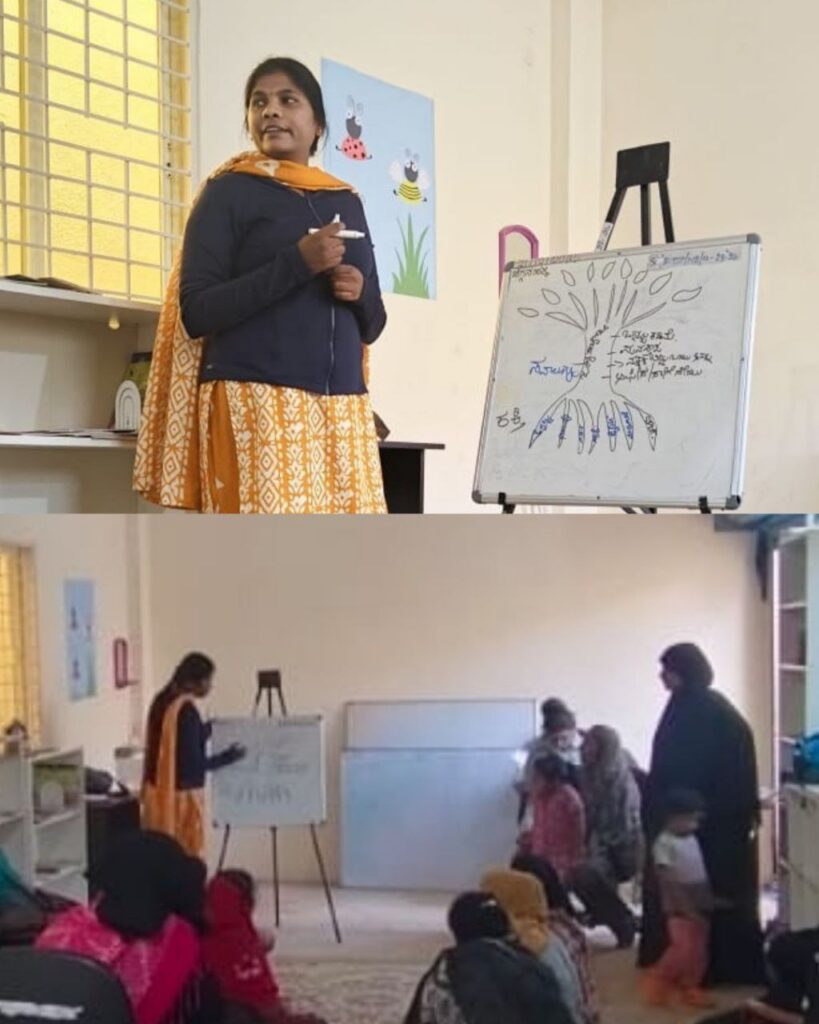
ಡಿಸೆಂಬರ್ 2025 ರಲ್ಲಿ, TGI COMPLUS ತಂಡವು ತನ್ನ 17 MAS ಗುಂಪುಗಳ ಜೊತೆ ಸೇರಿ “ನಮ್ಮ ಬಲ, ಸವಾಲುಗಳು ಮತ್ತು ಅವಕಾಶಗಳು” ಎಂಬ ವಿಷಯದ ಬಗ್ಗೆ ಚರ್ಚೆ ನಡೆಸಿತು.
ಗುಂಪುಗಳು ತಮ್ಮ ಬಗ್ಗೆ ತಾವೇ ಸುಲಭವಾಗಿ ಅರ್ಥಮಾಡಿಕೊಳ್ಳಲು, ನಾವು ಅವರಿಗೆ ಒಂದು ‘ಮರದ’ ಉದಾಹರಣೆಯನ್ನು ನೀಡಿದೆವು. ಗುಂಪುಗಳು ತಮ್ಮ ಕೆಲಸಗಳು ಮತ್ತು ಗುರಿಗಳನ್ನು ಒಂದು ಮರಕ್ಕೆ ಹೋಲಿಸಿ ನೋಡುವಂತೆ ಕೇಳಿಕೊಳ್ಳಲಾಯಿತು. ಮರದ ಪ್ರತಿ ಭಾಗವು ಈ ಕೆಳಗಿನ ಅರ್ಥವನ್ನು ನೀಡುತ್ತದೆ:
- ಬೇರುಗಳು: ಗುಂಪಿಗೆ ಶಕ್ತಿ ನೀಡುವ ಗುಣಗಳು.
- ಕಾಂಡ: ಗುಂಪಿನಲ್ಲಿರುವ ಕೆಲವು ಕೊರತೆಗಳು ಅಥವಾ ದೌರ್ಬಲ್ಯಗಳು.
- ಕೊಂಬೆಗಳು: ಗುಂಪು ಬಳಸಿಕೊಳ್ಳಬಹುದಾದ ಹೊಸ ಅವಕಾಶಗಳು.
- ಎಲೆಗಳು: ಎದುರಾಗಬಹುದಾದ ಸಮಸ್ಯೆಗಳು ಅಥವಾ ಹೊರಗಿನ ಅಡೆತಡೆಗಳು.
ಈ ಮರದ ಉದಾಹರಣೆಯು ಗುಂಪುಗಳು ತಾವು ಯಾವುದರಲ್ಲಿ ಮುಂದಿದ್ದೇವೆ ಮತ್ತು ಎಲ್ಲಿ ಹಿಂದುಳಿದಿದ್ದೇವೆ ಎಂದು ತಿಳಿಯಲು ಸಹಾಯ ಮಾಡಿತು. ಜೊತೆಗೆ, ಅವರ ಸಹಭಾಗಿತ್ವ ಮತ್ತು ವಕಾಲತ್ತು ಪ್ರಯತ್ನಗಳಲ್ಲಿ ಎದುರಿಸಬಹುದಾದ ಹೊಸ ಅವಕಾಶಗಳು ಮತ್ತು ಬಾಹ್ಯ ಬೆದರಿಕೆಗಳನ್ನು ಅರ್ಥಮಾಡಿಕೊಳ್ಳಲು ಇದು ಮಾರ್ಗದರ್ಶನ ನೀಡಿತು.
ಈ ಚಟುವಟಿಕೆಯ ಮೂಲಕ, MAS ಗುಂಪುಗಳು ತಮ್ಮ ಪ್ರಮುಖ ಸಾಮರ್ಥ್ಯಗಳನ್ನು ಹಂಚಿಕೊಂಡಿವೆ:
- ಸ್ಥಳೀಯ ಸಮುದಾಯದ ಸಮಸ್ಯೆಗಳನ್ನು ಗುರುತಿಸುವುದು ಮತ್ತು ಮಾಸಿಕ ಸಭೆಗಳಲ್ಲಿ ಅವುಗಳ ಬಗ್ಗೆ ಧ್ವನಿ ಎತ್ತುವುದು (12 ಬಾರಿ ಉಲ್ಲೇಖಿಸಲಾಗಿದೆ).
- ಸಾಮಾನ್ಯ ಸಮಸ್ಯೆಗಳಿಗಾಗಿ ಎಲ್ಲರೂ ಒಟ್ಟಾಗಿ ಹೋರಾಡುವುದು (11 ಬಾರಿ ಉಲ್ಲೇಖಿಸಲಾಗಿದೆ).
- ಅಧಿಕಾರಿಗಳೊಂದಿಗೆ ಮಾತನಾಡಲು ಹೆಚ್ಚಿನ ಆತ್ಮವಿಶ್ವಾಸ ಬಂದಿರುವುದು (11 ಬಾರಿ ಉಲ್ಲೇಖಿಸಲಾಗಿದೆ).
12ನೇ MAS ಗುಂಪಿನ ಸದಸ್ಯರೊಬ್ಬರು ಹೇಳಿದಂತೆ, “ನಾವು ವಾಸಿಸುವ ಸ್ಥಳದಲ್ಲಿ ಏನೆಲ್ಲಾ ಸಮಸ್ಯೆಗಳಿವೆ ಎಂಬುದು ನಮಗೆ ಚೆನ್ನಾಗಿ ತಿಳಿದಿದೆ ಮತ್ತು ನಾವು ಅವುಗಳ ಬಗ್ಗೆ ಮಾತನಾಡುತ್ತೇವೆ.” ಸ್ಥಳೀಯ ಸಮಸ್ಯೆಗಳನ್ನು ಒಗ್ಗಟ್ಟಿನಿಂದ ಪರಿಹರಿಸಬಹುದೆಂಬ ಅರಿವು ಮತ್ತು ಆತ್ಮವಿಶ್ವಾಸ ಸದಸ್ಯರಲ್ಲಿ ಇದ್ದಾಗ ಮಾತ್ರ ಸಮುದಾಯದ ಪಾಲ್ಗೊಳ್ಳುವಿಕೆ ಹೆಚ್ಚು ಪರಿಣಾಮಕಾರಿಯಾಗುತ್ತದೆ.
ಪ್ರಸ್ತುತ, ನೀರಿನ ಸಮಸ್ಯೆ ಮತ್ತು ಹಕ್ಕುಪತ್ರಗಳಂತಹ ಮುಖ್ಯ ವಿಷಯಗಳು MAS ಸದಸ್ಯರನ್ನು, ಅವರ ಕುಟುಂಬಗಳನ್ನು ಮತ್ತು ಸ್ಥಳೀಯ ನಾಯಕರನ್ನು ಒಂದೆಡೆ ಸೇರಿಸುವಲ್ಲಿ ಯಶಸ್ವಿಯಾಗಿವೆ. ಕಷ್ಟದ ಸಮಯದಲ್ಲಿ ಈ ಒಗ್ಗಟ್ಟು ಇನ್ನು ಹೆಚ್ಚಾಗಿರುತ್ತದೆ. 9ನೇ ಗುಂಪಿನ ಸದಸ್ಯರೊಬ್ಬರು ಹೀಗೆ ಹೇಳಿದರು, “ನಮ್ಮಲ್ಲಿ ಎಷ್ಟೇ ಭಿನ್ನಾಭಿಪ್ರಾಯಗಳಿದ್ದರೂ, ಕೆಲಸದ ವಿಷಯ ಬಂದಾಗ ನಾವೆಲ್ಲರೂ ಒಂದಾಗುತ್ತೇವೆ; ನಮಗೆ ಬೇಕಾಗಿರುವುದು ಇದೇ.”
ಕುಡಿಯುವ ನೀರಿನಂತಹ ತುರ್ತು ಸಮಸ್ಯೆಗಳೊಂದಿಗೆ ಕೆಲಸ ಆರಂಭಿಸುವುದು, ಮುಂದೆ ಆರೋಗ್ಯ ನೀತಿ ಮತ್ತು ವ್ಯವಸ್ಥಿತ ಬದಲಾವಣೆಯಂತಹ ವಿಶಾಲ ವಿಷಯಗಳತ್ತ ಸಾಗಲು ಗುಂಪಿಗೆ ಸಹಕಾರಿಯಾಗುತ್ತದೆ. ಇದುವರೆಗೆ ಹೆಚ್ಚಿನ ಕೆಲಸಗಳು ಸ್ಥಳೀಯ ಸಮಸ್ಯೆಗಳ ಮೇಲೆ ನಡೆದಿವೆ; ಈಗ ಇದೇ ಒಗ್ಗಟ್ಟಿನ ಬಲದೊಂದಿಗೆ ದೀರ್ಘಕಾಲದ ಸವಾಲುಗಳನ್ನು ಎದುರಿಸಲು ನಾವು ಸಿದ್ಧರಾಗಬೇಕಿದೆ.
PHCಗಳು (ಆರೋಗ್ಯ ಕೇಂದ್ರಗಳು), ಆಶಾ ಕಾರ್ಯಕರ್ತೆಯರು, ಸ್ತ್ರೀಶಕ್ತಿ ಸಂಘಗಳು (SHGs) ಮತ್ತು ಸ್ಥಳೀಯ ಸಮುದಾಯಗಳ ಬೆಂಬಲವು MAS ಗುಂಪುಗಳ ಕೆಲಸಕ್ಕೆ ಬಹಳ ಮುಖ್ಯವಾಗಿದೆ. ಆದರೆ, ಇದು ಒಂದು ರೀತಿಯ ಪರಾವಲಂಬನೆಯನ್ನೂ ತೋರಿಸುತ್ತಿದೆ. ಒಬ್ಬ ಸದಸ್ಯರು ಹೇಳಿದಂತೆ, “ಸಂಗಮ ಸಂಸ್ಥೆ ಇಲ್ಲದಿದ್ದರೆ ನಾವು ಇಷ್ಟು ಮಾತನಾಡುತ್ತಿರಲಿಲ್ಲ; ಅವರು ನಮಗೆ ಶಿಕ್ಷಣ, ಸರ್ಕಾರಿ ಯೋಜನೆಗಳು, ಆರೋಗ್ಯ, ಮಹಿಳೆ ಮತ್ತು ಮಕ್ಕಳ ಕಲ್ಯಾಣ ಹಾಗೂ ಹಕ್ಕುಪತ್ರಗಳ ಬಗ್ಗೆ ತರಬೇತಿ ಮತ್ತು ಮಾಹಿತಿ ನೀಡುತ್ತಿದ್ದಾರೆ.” ಇದು ಒಂದು ಮುಖ್ಯ ಪ್ರಶ್ನೆಯನ್ನು ಹುಟ್ಟುಹಾಕುತ್ತದೆ: ಭವಿಷ್ಯದಲ್ಲಿ ಈ ಹೊರಗಿನ ಬೆಂಬಲ ಕಡಿಮೆಯಾದರೆ, MAS ಗುಂಪುಗಳು ತಮ್ಮ ಕೆಲಸಗಳನ್ನು ಹೇಗೆ ತಾವೇ ಮುಂದುವರಿಸುತ್ತವೆ?
ತಮ್ಮ ಸಾಮರ್ಥ್ಯಗಳ ನಡುವೆಯೂ, ಈ ಗುಂಪುಗಳು ಕಾರ್ಯನಿರ್ವಹಿಸಲು ಕೆಲವು ಆಂತರಿಕ ಮತ್ತು ಬಾಹ್ಯ ಅಡೆತಡೆಗಳನ್ನು ಎದುರಿಸುತ್ತಿವೆ.
ವೈಯಕ್ತಿಕ ಜವಾಬ್ದಾರಿಗಳ ಕಾರಣದಿಂದಾಗಿ ಸಭೆಗಳಿಗೆ ಬರುವವರ ಸಂಖ್ಯೆ ಕಡಿಮೆಯಾಗುತ್ತಿದೆ (9 ಬಾರಿ ಉಲ್ಲೇಖಿಸಲಾಗಿದೆ) ಎಂದು ಮಹಿಳೆಯರು ತಿಳಿಸಿದ್ದಾರೆ. 5ನೇ ಗುಂಪಿನ ಸದಸ್ಯರು ವಿವರಿಸಿದಂತೆ, “ಆರಂಭದಲ್ಲಿ ಸಭೆಗಳಿಗೆ ತುಂಬಾ ಜನ ಬರುತ್ತಿದ್ದರು, ಆದರೆ ಸಮಯ ಕಳೆದಂತೆ ಸಂಖ್ಯೆ ಕಡಿಮೆಯಾಯಿತು… ಮನೆಯ ಕೆಲಸಗಳು ಬರುತ್ತವೆ, ಹಾಗಾಗಿ ಹಾಜರಾತಿ ಕಡಿಮೆಯಿದೆ.” ಆರ್ಥಿಕ ತೊಂದರೆಗಳು, ಸಮಯದ ಅಭಾವ ಮತ್ತು “ಸಭೆಗಳಿಗೆ ಹೋಗುವುದರಿಂದ ಏನು ಪ್ರಯೋಜನ?” ಎಂದು ಕುಟುಂಬದವರು ಕೇಳುವ ಪ್ರಶ್ನೆಗಳು ಮಹಿಳೆಯರ ಪಾಲ್ಗೊಳ್ಳುವಿಕೆಗೆ ಅಡ್ಡಿಯಾಗುತ್ತಿವೆ.
9ನೇ ಗುಂಪಿನ ಸದಸ್ಯರೊಬ್ಬರು ತಮ್ಮ ಕುಟುಂಬದವರ ಮಾತುಗಳನ್ನು ಹೀಗೆ ಹಂಚಿಕೊಂಡಿದ್ದಾರೆ: “ಅಲ್ಲಿಗೆ ಯಾಕೆ ಹೋಗುತ್ತೀಯಾ? ಆ ಮೀಟಿಂಗ್ನಿಂದ ಏನು ಸಿಗುತ್ತದೆ? ಇಷ್ಟು ವರ್ಷ ನಮಗೆ ಮಾಡಲು ಸಾಧ್ಯವಾಗದ ಕೆಲಸವನ್ನು ನಿನಗೆ ಮಾಡಲು ಸಾಧ್ಯವೇ?” ಸಭೆಗಳಿಂದ ತಕ್ಷಣಕ್ಕೆ ಯಾವುದೇ ಫಲಿತಾಂಶ ಕಾಣದಿದ್ದಾಗ ಕುಟುಂಬದವರು ಸಂಶಯ ವ್ಯಕ್ತಪಡಿಸುತ್ತಾರೆ ಮತ್ತು ಮಹಿಳೆಯರು ಮನೆಯಲ್ಲಿ ಇರುವುದೇ ಒಳ್ಳೆಯದು ಎಂದು ಅಭಿಪ್ರಾಯಪಡುತ್ತಾರೆ.
ಈ ಗುಂಪುಗಳು ದೀರ್ಘಕಾಲದವರೆಗೆ ಸಕ್ರಿಯವಾಗಿರಲು ಕುಟುಂಬದ ಬೆಂಬಲ ಅತ್ಯಗತ್ಯ. ಇದನ್ನು ಬಲಪಡಿಸಲು, ಗುಂಪುಗಳು ಸಣ್ಣ ಸಣ್ಣ ಕೆಲಸಗಳಲ್ಲಿ ತಕ್ಷಣದ ಯಶಸ್ಸನ್ನು ಸಾಧಿಸಬೇಕು ಮತ್ತು ಮನೆಯವರನ್ನೂ ಈ ಚಟುವಟಿಕೆಗಳಲ್ಲಿ ತೊಡಗಿಸಿಕೊಳ್ಳಬೇಕು. ಇದು ಸಮುದಾಯದ ಕೆಲಸಗಳಲ್ಲಿ ಭಾಗವಹಿಸುವುದರ ಮಹತ್ವವನ್ನು ಕುಟುಂಬದವರಿಗೆ ಮನವರಿಕೆ ಮಾಡಲು ಸಹಾಯ ಮಾಡುತ್ತದೆ.
ಅಧಿಕಾರಿಗಳ ನಿರ್ಲಕ್ಷ್ಯವು ಹೊರಗಿನಿಂದ ಎದುರಾಗುವ ದೊಡ್ಡ ಸವಾಲಾಗಿದೆ (12 ಬಾರಿ ಉಲ್ಲೇಖಿಸಲಾಗಿದೆ). ಸಮುದಾಯದ ಮನವಿಗಳನ್ನು ಅಧಿಕಾರಿಗಳು ಹೆಚ್ಚಾಗಿ ನಿರ್ಲಕ್ಷಿಸುತ್ತಾರೆ ಅಥವಾ ವಿಳಂಬ ಮಾಡುತ್ತಾರೆ, ಇದರಿಂದ ಸದಸ್ಯರು ನಂಬಿಕೆ ಕಳೆದುಕೊಳ್ಳುತ್ತಾರೆ. 12ನೇ ಗುಂಪಿನ ಸದಸ್ಯರೊಬ್ಬರು ವಿವರಿಸಿದಂತೆ, ಯಾವುದಾದರೂ ಕೆಲಸಕ್ಕೆ ಪತ್ರ ನೀಡಲು ಹೋದಾಗ ಅಧಿಕಾರಿಗಳು “ನಾಳೆ ಬನ್ನಿ “, “ನಾಡಿದ್ದು ಬನ್ನಿ” ಎಂದು ಸಬೂಬು ಹೇಳುತ್ತಾರೆ. ಹೀಗೆ ಪದೇ ಪದೇ ಅಲೆದಾಡಿಸುವುದರಿಂದ ಸದಸ್ಯರಲ್ಲಿ ಆತ್ಮವಿಶ್ವಾಸ ಕಡಿಮೆಯಾಗಿ, ಅವರು ಪ್ರಯತ್ನವನ್ನೇ ಕೈಬಿಡುತ್ತಾರೆ. ಅಧಿಕಾರಿಗಳಿಗೆ MAS ಗುಂಪುಗಳ ಬಗ್ಗೆ ಸರಿಯಾದ ಅರಿವು ಇಲ್ಲದಿರುವುದು ಮತ್ತು ಅಧಿಕಾರದಲ್ಲಿನ ವ್ಯತ್ಯಾಸ ಇದಕ್ಕೆ ಕಾರಣವಾಗಿರಬಹುದು. ಆದ್ದರಿಂದ, ಸದಸ್ಯರ ಉತ್ಸಾಹವನ್ನು ಉಳಿಸಿಕೊಳ್ಳುವುದು ಎಷ್ಟು ಮುಖ್ಯವೋ, ಅಧಿಕಾರಿಗಳಿಗೆ ಗುಂಪಿನ ಬಗ್ಗೆ ತಿಳಿಸಿಕೊಡುವುದೂ ಅಷ್ಟೇ ಮುಖ್ಯವಾಗಿದೆ.
ಇದಲ್ಲದೆ, ಸ್ಥಳೀಯ ನಾಯಕರಿಂದ ಬೆಂಬಲ ಸಿಗದಿರುವುದು (9 ಬಾರಿ ಉಲ್ಲೇಖಿಸಲಾಗಿದೆ) ಮತ್ತು ಅವರು ಕೆಲಸಕ್ಕೆ ತೊಂದರೆ ನೀಡಬಹುದು ಎಂಬ ಭಯವು ಸದಸ್ಯರಲ್ಲಿ ಆತಂಕ ಮೂಡಿಸಿದೆ. 8ನೇ ಗುಂಪಿನ ಸದಸ್ಯರೊಬ್ಬರು ಹೇಳಿದಂತೆ, “ನಾವು ಸ್ಥಳೀಯ ನಾಯಕರನ್ನು ಭೇಟಿ ಮಾಡಿದಾಗ, ಅವರು ನಮಗೆ ಕಾಫಿ-ತಿಂಡಿ ನೀಡಿ ವಿಷಯವನ್ನು ಮರೆಯುವಂತೆ ಮಾಡುತ್ತಾರೆ. ಕೆಲಸ ಮಾಡುತ್ತೇವೆ ಎಂದು ಹೇಳುತ್ತಾರೆಯೇ ಹೊರತು ಮಾಡುವುದಿಲ್ಲ.” ಅಂದರೆ, ಕೆಲವು ನಾಯಕರು ನೈಜ ಸಮಸ್ಯೆಗಳನ್ನು ಬಗೆಹರಿಸುವ ಬದಲು ಉಪಚಾರದ ಮೂಲಕ ವಿಷಯವನ್ನು ಮರೆಮಾಚುತ್ತಾರೆ. ಇದು ಅವರ ಅಧಿಕಾರವನ್ನು ಉಳಿಸಿಕೊಳ್ಳುವ ಅಥವಾ ರಾಜಕೀಯ ಕಾರಣಗಳಿಂದ ಮಾಡುವ ತಂತ್ರವಾಗಿರಬಹುದು. ಆದರೆ ಅಕ್ಟೋಬರ್ 2025ರಲ್ಲಿ ಸಂದೀಪ್ ಲೇಔಟ್ನಲ್ಲಿ ನಡೆದ ‘ಯಶಸ್ಸಿನ ಸಂಭ್ರಮ’ ಕಾರ್ಯಕ್ರಮವು ನಾಯಕರು ಮತ್ತು MAS ಗುಂಪುಗಳನ್ನು ಒಂದೆಡೆ ಸೇರಿಸುವುದರಿಂದ ಅಧಿಕಾರಿಗಳಲ್ಲಿ ಹೊಣೆಗಾರಿಕೆ ಹೆಚ್ಚಿಸಬಹುದು ಎಂಬುದನ್ನು ನಮಗೆ ತೋರಿಸಿಕೊಟ್ಟಿದೆ.