
2026

When communities come together they DEFINITELY WIN!

From Approved to Actual: Parsi Wadi’s Long Road to Water Blog by SPARC   Last year, we presented a blog titled “When communities come together, they win”, on the water issue in Parsi Wadi, an informal settlement in Mumbai where COMPLUS has created health committees. The blog described the burden of poor water pressure and inadequacy of water and thewoes that it brought to the community, particularly the women. This was the first issue that the committee wanted to resolve. After a long battle, the issue is now fully resolved! Back to some history, the work on the new waterpipeline in Parsi Wadi began on 27 March 2025. For residents, this felt like the end of a long fight. They had spent years asking the Brihanmumbai Municipal Corporation (BMC) to replace the old pipes. The old pipes gave barely enough water fora day’s needs. The letter of approval had come. The digging had started. But this was not the end of the story. It was the end of one chapter. Getting a pipeline approved is one task. Getting it built, connected to every home, and switched on is another. For Parsi Wadi, this second task took more than a year. Each step caused a lot of skepticism around the achievement , “would we finally have water running with good force and in adequate quantities inside our homes?” Following up on the paperwork Approval did not mean the work would move on its own. Residents had to stay engaged with the Municipal Corporation at every step. The committee met the Ward Disaster Management Assistant Commissioner, Sachin Tarkar, and the Deputy Commissioner. They went through tender documents and technical drawings together. This helped them understand what was still pending. For close to three years in total, residents kept returning to the ward office. They met engineers in the Connection Department again and again. Each time, they were told the file was still in process. The pace picked up only after the local corporator got involved. The committee also kept raising the issue in meeting after meeting. Around ten residents, along with committee members, began meeting connection department engineers directly. Slowly, work on the mainline pipe through the settlement started. Disputes within the community The construction work brought its own problems. Some residents disagreed on where the new lines should run. This disagreement stalled the work for nearly three months. Other residents did not want digging outside their homes. This fear was familiar from Part 1, when nearby localities had worried about broken sewer lines and narrow roads. At one point, tensions rose so much that police protection was needed to continue the mainline work. Through all this, committee members stayed involved. They mediated disputes between neighbours. They kept pressure on contractors. They made sure the work did not quietly stall, the way it had for years before. Pipeline complete, water still not flowing By June 2026, the physical pipeline work was complete. But completed construction did not mean water in the taps. At a meeting on 6 June, officials told residents that supply would start once the remaining paperwork was cleared. The committee kept following up. On 10 June, an engineer from the Connection Department confirmed the pipeline work was done. But the water connection had still not been switched on. Residents went back to the Municipal Corporation again to press for this final step. On 12 June 2026, the Municipal staff came to Parsi Wadi to activate individual household connections. This process brought out problems that had built up over years. Some homes had no water meters at all. Others had unauthorized, tapped connections. These had to be regularised before a proper connection could be given. In one case, an existing connection was disconnected and a penalty was imposed. The matter was resolved later through discussion with the residents. Water has reached Parsi Wadi. The inauguration is still to come. By 29 June 2026, the remaining connection work was complete. Water supply to Parsi Wadi began. It has been more than four years since residents first raised the issue of low water pressure. It has been more than a year since the pipeline work they negotiated for, finally began. Today, water has reached the households of Parsi Wadi. The formal inauguration of the new water connection has not happened yet. It is expected to take place soon, marking official recognition of a negotiation that has lasted years. The Parsi Wadi committee’s efforts paid off, after years or negotiation and painstaking follow up. Women walked to the ward office every fifteen days. Committee members mediated between neighbours who did not always agree. The community did not let an approved project quietly turn into a shelved one. The tap runs now. This is the result of everyone who kept showing up until it did.  

When communities come together they DEFINITELY WIN! Read More »

NGOs, Community, and the Public Health System

Authors – Shayari Nag, Sweta Dash and Pushpa V – The George Institute for Global Health The Mahila Arogya Samiti (MAS) platform was envisioned under the National Urban Health Mission (NUHM) as a space for community participation in urban health systems, encouraging urban poor women to become active participants. Policy dictates that these committees be established under the Primary Health Centre (PHC) and involve strong collaboration between the community, the frontline health workers – Accredited Social Health Activist (ASHA), the Medical Officer (MO), and other urban departments. Yet, in practice, the MAS often remains under-supported. ASHAs receive no financial incentive for MAS-related work, and PHC staff are frequently unaware of the platform’s mandate or at times even of their existence and their continued functioning. Even basic procedural elements, such as registration or the release of the ₹5000 fund, are inconsistently implemented and inadequately understood by the stakeholders associated with MAS. In Bengaluru, our team of researchers from TGI has been working in close ties with our community mobilisers and our partner organisations, under the ambit of the COMPLUS project to address these systemic gaps by strengthening collaboration between the community and the public health system. Our experiences from the 17 MAS groups that we have been working with illustrate that the vacuum created by weak institutional engagement required NGOs to provide services, guidance, and facilitation. However, owing to the nuanced nature of community participation in urban health systems, the role of NGOs has not been a straightforward one; instead, it has been proven to be one of a double-edged sword. Filling Systemic Gaps In several MAS areas, NGO-run clinics have emerged as accessible alternatives to overstretched public facilities. Their low-cost consultations, community outreach, and follow-up mechanisms have made them popular, especially among migrant populations facing language barriers and discrimination in government hospitals. For instance, one MAS member explained how the NGO-run clinic works: “First, when we go (to the Clinic), we pay 20 rupees as a fee (where other private practitioners take around 100 – 200 rupees for consultations). They check our BP, height, weight, and blood sugar. Then the doctor asks us what is wrong. If they can solve it, they will give us a prescription for medicine.” These clinics often act as intermediaries, referring patients to higher-level government facilities and ensuring smoother navigation through bureaucratic systems. Our interactions with community members in the MAS meetings as well as our experiences from the 21 IDIs we conducted between July and September of 2025, show that the referrals from the NGO-run clinics typically include a clear diagnosis, medical history, and the specific support required. This information allows the overwhelmed hospitals to allocate time and resources more effectively for the patient’s needs. In some instances, these intermediary roles extend into the internal functioning of hospitals. Community accounts describe specific individuals, such as multilingual reception staff connected to NGOs, who facilitate patient navigation by translating, organizing documents, and guiding patients through administrative processes. These forms of mediation reduce bureaucratic friction and make public institutions more accessible in practice. A significant part of the effectiveness of NGO interventions lies in their community outreach. Local health workers, often referred to as “Akkas,” act as trusted points of contact. Beyond outreach, their role also includes proactive engagement, follow-up visits, and emotional support. Community members approach them with a wide range of concerns, and their responses often extend beyond strictly medical issues. A MAS member said, “No matter what (any problem), they (community members) come and tell Akka.”  This “Akka” also reinforces the low-cost benefit of the clinic: “Our Sir has a hospital, go there. Why do you want to waste your money?” This sustained, relational engagement builds trust and reinforces the perceived reliability of NGO-linked services. For vulnerable and marginalised households, especially those navigating precarious social and economic conditions, NGOs bridge critical gaps in access and trust that the public system does not consistently address. Reconfiguring Accountability Yet, this same mediation can subtly weaken the very foundation of community participation. As NGOs become central to service delivery and system navigation, communities begin to rely on them as primary points of contact for healthcare, information, and grievance redressal. This shifts the locus of accountability away from PHCs and ASHAs, altering the intended structure of community participation under MAS. Within MAS meetings, NGO staff often take on facilitative or directive roles that are formally assigned to ASHAs. Their participation, even when informal, influences the direction of discussions. Conversations may be steered toward topics aligned with NGO programmatic priorities rather than emerging organically from community concerns, thereby creating a top-down dynamic into what is intended to be a participatory platform. Instances from our field observations in MAS meetings illustrate how this dynamic operates. Discussions raised by community members can be curtailed or redirected if they fall outside the thematic focus of NGO activities. We have heard statements such as “Oh no, this is not the right meeting for this conversation. We talk about contraception in our NGO health meeting next week.” In such cases, the boundaries of what can be discussed are not determined the needs articulated within the group. Additionally, when community concerns are dismissed or addressed in a manner perceived as condescending, the space ceases to function as a forum for collective problem-solving. For instance, the MAS members wanted to seek a peaceful solution to the issue of the Aanganwadi worker sending their children back home since the children were not able to clean up after themselves. In response, the worker from the NGO promptly reprimanded them and said they should have worked better to teach their children to clean up. In doing so, she did highlight the overburden of the Aanganwadi workers, but her tone left the community members feeling unheard and ignored. Such exchanges can silence participants and discourage the articulation of concerns. Concerns also emerge regarding the quality and accuracy of information disseminated by NGO field staff. In the absence of supervision and/or standardised training, some health advice shared during MAS meetings

NGOs, Community, and the Public Health System Read More »

The Tree of Collective Action: Insights from the MAS Group Thematic Discussion on Strengths, Challenges, and Opportunities

Authors: Shayari Nag, Sweta Dash, Pushpa V and Menaka M B – The George Institute for Global Health In December 2025, the TGI COMPLUS Team engaged 17 of its MAS groups in a thematic discussion titled:  Assessing Our Strengths, Challenges, and Opportunities. To visually facilitate a collective self-assessment, we encouraged them to reflect using a metaphor of a tree. The groups were asked to think of their roles, responsibilities, experiences, and aspirations with their MAS groups as a tree with each part signifying the following: Roots – representing the inner strengths that ground them, Trunk – acknowledging weaker spots, Branches – to reach for opportunities, and Leaves – identifying their external threats to build more resilience against the strong winds. This visual metaphor guided the groups to define what they excel at and where they struggle, alongside the external environment, including new opportunities and potential threats that they may face in their participatory and advocacy efforts of their respective MAS groups. The tree exercise captured MAS groups’ collective self‑assessment, shown here is input from Group 10’s meeting in December 2025. Through this activity, MAS groups highlighted their key strengths: Identifying local community issues and voicing them in monthly meetings (mentioned 12 times), Mobilising collective action on common concerns (mentioned 11 times) Improved confidence in engaging with authorities ( noted 11 times). As one member from MAS Group 12 stated, “We know exactly what problems exist in the place where we live, and we speak about them.” Community participation is most effective when members recognise that local issues can be solved through collective action, and confidence is essential for formal advocacy. At present, tangible pain points common to most of the MAS groups, such as water and land rights, have been the most effective in bringing together MAS members, their families, and local leaders. A member from Group 9 said, “Whatever misunderstandings we have, when it comes to a task, we all unite; that is what is needed.” In our work with these groups over the last two years, through repeated mechanisms of grievance addressal and accountability-seeking, we have managed to address several concerns in this direction. For instance, together we have been able to start a new aanganwadi centre in Pillanganahalli, handle water provision issues in Hegganahalli, road issues in Rajagopala Nagar, and more. In doing so, we have moved forward in further strengthening people’s desire for and motivation towards effective community participation in the urban health system. And, it is these immediate, critical issues that have helped the group gradually move toward broader topics like health policy and system-level advocacy. External Support, such as information and guidance from partner organisations (highlighted 11 times) and support from PHCs, ASHA, SHGs, and local community groups, is highlighted as vital for facilitating MAS and supporting the issues addressed through MAS. However, it also highlights a potential dependency: “If the Sangama organisation weren’t there, we wouldn’t have spoken this much; it is providing us with different types of training and information regarding education, schemes, health, women and children, and title deeds are being received” suggesting the need to reflect on how the advocacy MAS groups will sustain their activities if this external support were to decrease in the future. Despite their strengths, the groups face external and internal hurdles that hinder their functioning. Community Mobiliser Pushpa V conducting the thematic discussion with MAS Group 5, December 2025. Women highlighted reduced attendance (mentioned 9 times) due to personal responsibilities. As members from Group 5 explained, “Many people used to come to meetings initially, but the numbers decreased over time… Personal work comes up, the population (attendance) is low.” Participation is often hindered by economic and time constraints, as well as family members questioning the usefulness of the meetings (noted 9 times). One member from  Group 9 shared their family’s opinion, “Why do you go there? What comes of that meeting? Is it possible for you to do what we haven’t been able to do all these years?” These conversations further corroborated the gendered nature of community participation, wherein women’s time use is always already under question from different fronts. Their household members often tend to assume their time is better spent at home conducting their household duties solely. However, over the years, these women have also managed to build their confidence in standing up to these demands and requests for their time, and thereby committed more to the MAS meetings. The most frequent external challenge is negligence by officials (highlighted 12 times), where community requests are ignored or delayed, leading these community members to lose faith. As one member from Group 12 explained, when they go to submit a letter for any work, officials often say, “Come tomorrow” or “Come the day after.” This repeated dismissal causes members to lose confidence and eventually give up. This happens because officials may not take MAS members seriously due to power imbalances and the low visibility of MAS. This suggests that sustaining member motivation is as important as building external recognition among officials. Additionally, a lack of support from local leaders (mentioned 9 times) and fear of retaliation or disruption of personal work by these leaders have created a climate of anxiety for some members. As one member from Group 8  explained, “When we meet local leaders, they give us coffee and snacks to make us forget the topic and say they will do the work, but they don’t do it.” This shows how local leaders sometimes use gestures of hospitality to appear supportive while avoiding real engagement with MAS concerns, or even outright dismissing requests. Such behaviour often stems from power dynamics, where leaders want to maintain control without committing to change, or from political agendas that prioritise certain communities over others. The experience at the Yashashina Sambrama event in Sandeep Layout, October 2025, showed us how bringing leaders together with MAS groups can help them better understand MAS’s work, make community demands more visible, and encourage accountability. This exercise enabled the MAS members and

The Tree of Collective Action: Insights from the MAS Group Thematic Discussion on Strengths, Challenges, and Opportunities Read More »

Planning a Community-Led Intervention: The Idea Behind a MAS Celebration in Sandeep Layout, Bengaluru

Authors – Sweta Dash, Shayari Nag, Pushpa V and Menaka MB In Sandeep Layout, Bengaluru, the Mahila Arogya Samiti (MAS) experimented with something simple but meaningful for effective realisation and celebration of community participation in urban health systems: organising a collective event that brings together different stakeholders including community members, frontline health workers, local leaders, The George Institute of Global Health India’s research team and their partner organisations. The idea for this celebratory event did not emerge from a formal event plan made in silos. Instead, it emerged during the MAS meeting in September where our thematic discussion was around the elements of the proposed intervention for the NIHR-COMPLUS research project aimed at strengthening how community participation in urban health systems works in practice. The George Institute’s team of researchers had synthesised findings, observations, and learnings from MAS meetings in the last 2 years, to arrive at a proposed intervention with distilled elements and a theory of change that duly reflected the realities and needs on ground. As a part of the team’s attempt to incorporate participatory approaches and centre co-production, the proposed intervention plan has been shared with MAS members in all 17 groups that the team has been working with. Two themes in particular sparked strong interest among the women. The first was building and improving interpersonal relationships between frontline health workers (FHWs) and MAS members. The second focused on ensuring stronger linkages with higher-level governance structures so that community concerns could travel upward and receive responses. As these ideas were discussed, MAS members began reflecting on their own experiences engaging with officials and health workers. The MAS group had been active in addressing issues like sanitation, drainage, and public services. As a MAS member recalled, “Because we all went and spoke at BBMP and the local leaders, the road and drainage work is in process.” Yet, there were missed opportunities and unaddressed concerns which they felt could have been sorted out with better relationships and communication mechanisms with all the relevant stakeholders. That discussion led to a practical suggestion from them to organise an event coinciding with their two-year anniversary. Their idea was to use the occasion to invite FHWs, municipal representatives, local leaders, and neighbouring MAS groups. The gathering could celebrate the group’s journey so far while also creating space to build relationships, share experiences, and strengthen connections with institutions that influence local governance and health systems. It was being planned as a platform where the MAS members can speak about their work, interact directly with stakeholders, and make their presence visible within the local governance ecosystem. In doing so, the celebration became part of the intervention itself. Rather than treating community participation as something abstract, the MAS members attempted to collaborate and create a concrete moment where relationships could be built, conversations could happen, and new linkages could emerge. As preparations moved forward, the focus remained on collective ownership. The MAS members took charge of designing the agenda, inviting guests, and coordinating logistics. With the support of our community mobiliser, Pushpa, they negotiated with the local leader to secure access to a venue for the event despite the initial opposition from the local leader. They also ironed out their own interpersonal differences and worked together to execute this event. In October, the event eventually brought together more than 80 participants from the neighbourhood and nearby areas. Representatives from the Bruhat Bengaluru Mahanagara Palike (BBMP), FHW, local leaders, and members of neighbouring MAS groups also attended the programme. Several invited guests used the platform to engage with the community. Shanthi, a BBMP representative, spoke about the importance of formally registering women’s self-help groups so they could better access government schemes. Shivakumar, a local Congress representative, spoke about the state government’s welfare schemes and encouraged women to make full use of available public services and facilities. Local leaders Munikrishnappa and Venkatesh also addressed the gathering, congratulating the MAS members for organising the event and encouraging them to continue working with local institutions. Lakshmi, the president of the MAS group from Ambedkar Colony, shared examples from her own community’s work, including efforts to address water supply issues and strengthen awareness around public health services. Manohar Yelavathi and Nisha Gulur from Sangama spoke about the role MAS groups can play in strengthening community voices within public health systems. Shayari from the George Institute for Global Health acknowledged the effort the women had put into organising the gathering and highlighted the importance of platforms where community experiences can inform decision-making processes. For the MAS members of Sandeep Layout, the event was both a celebration and an experiment in building connections. In effect, the event became part of the intervention being tested and created spaces where MAS members could meet, speak, and begin building relationships with stakeholders, making participatory governance possible. ಸಮುದಾಯದ ನೇತೃತ್ವದಲ್ಲಿ ಬದಲಾವಣೆಯ ಯೋಜನೆ: ಬೆಂಗಳೂರಿನ ಸಂದೀಪ್ ಲೇಔಟ್‌ನ MAS ಸಂಭ್ರಮಾಚರಣೆಯ ಹಿಂದಿನ ಪರಿಕಲ್ಪನೆ ಲೇಖಕರು: ಶ್ವೇತಾ ದಾಶ್, ಶಾಯರಿ ನಾಗ್, ಪುಷ್ಪ ವಿ ಮತ್ತು ಮೇನಕಾ ಎಂ.ಬಿ. ಬೆಂಗಳೂರಿನ ಸಂದೀಪ್ ಲೇಔಟ್‌ನಲ್ಲಿ, ನಗರದ ಆರೋಗ್ಯ ವ್ಯವಸ್ಥೆಯಲ್ಲಿ ಸಮುದಾಯದ ಪಾಲ್ಗೊಳ್ಳುವಿಕೆಯನ್ನು ಗುರುತಿಸಲು ಮತ್ತು ಆಚರಿಸಲು, ಅಲ್ಲಿಯ ಮಹಿಳಾ ಆರೋಗ್ಯ ಸಮಿತಿಯು (MAS) ಒಂದು ಸರಳ ಹಾಗೂ ಅರ್ಥಪೂರ್ಣ ಪ್ರಯತ್ನವನ್ನು ಮಾಡಿತು. ಇದಕ್ಕಾಗಿ ಸಮುದಾಯದ ಸದಸ್ಯರು, ಆರೋಗ್ಯ ಕಾರ್ಯಕರ್ತೆಯರು (Frontline Health Workers – FHWs), ಸ್ಥಳೀಯ ನಾಯಕರು, ಜಾರ್ಜ್ ಇನ್‌ಸ್ಟಿಟ್ಯೂಟ್ ಆಫ್ ಗ್ಲೋಬಲ್ ಹೆಲ್ತ್ ಇಂಡಿಯಾದ ಸಂಶೋಧನಾ ತಂಡ ಮತ್ತು ಅವರ ಪಾಲುದಾರ ಸಂಸ್ಥೆಗಳನ್ನು ಒಳಗೊಂಡ ಒಂದು ಸಾಮೂಹಿಕ ಕಾರ್ಯಕ್ರಮವನ್ನು ಆಯೋಜಿಸಲಾಯಿತು. ಈ ಸಂಭ್ರಮಾಚರಣೆಯ ಆಲೋಚನೆಯು ಯಾವುದೋ ಒಂದು ಮುಚ್ಚಿದ ಕೋಣೆಯಲ್ಲಿ ಸಿದ್ಧಪಡಿಸಿದ ಔಪಚಾರಿಕ ಯೋಜನೆಯಲ್ಲ. ಬದಲಾಗಿ, ಇದು ಸೆಪ್ಟೆಂಬರ್ ತಿಂಗಳ MAS ಸಭೆಯಲ್ಲಿ ಮೂಡಿಬಂದ ವಿಚಾರ. ಆ ಸಭೆಯಲ್ಲಿ ನಾವು ನಗರದ ಆರೋಗ್ಯ ವ್ಯವಸ್ಥೆಯಲ್ಲಿ ಸಮುದಾಯದ ಪಾಲ್ಗೊಳ್ಳುವಿಕೆಯನ್ನು ಪ್ರಾಯೋಗಿಕವಾಗಿ ಹೇಗೆ ಬಲಪಡಿಸಬಹುದು ಎಂಬ ಗುರಿಯನ್ನು ಹೊಂದಿರುವ ‘NIHR-COMPLUS’ ಸಂಶೋಧನಾ ಯೋಜನೆಯ ಬಗ್ಗೆ ಚರ್ಚಿಸುತ್ತಿದ್ದೆವು. ಜಾರ್ಜ್ ಇನ್‌ಸ್ಟಿಟ್ಯೂಟ್‌ನ ಸಂಶೋಧನಾ ತಂಡವು ಕಳೆದ ಎರಡು ವರ್ಷಗಳ MAS ಸಭೆಗಳ ಅನುಭವ, ಅವಲೋಕನ ಮತ್ತು ಕಲಿಕೆಗಳನ್ನು ಒಟ್ಟುಗೂಡಿಸಿ; ಇವುಗಳಿಂದ ತಿಳಿದುಬಂದ ಪ್ರಮುಖ ಅಂಶಗಳನ್ನು (Distilled elements) ಮತ್ತು ಸ್ಥಳೀಯ ವಾಸ್ತವಗಳು , ಜನರ ಅಗತ್ಯಗಳನ್ನು ಪ್ರತಿಬಿಂಬಿಸುವ ‘ಬದಲಾವಣೆಯ ಸಿದ್ಧಾಂತ’ವನ್ನು (Theory of Change) ಆಧರಿಸಿದ ಒಂದು ಸುಧಾರಣಾ ಯೋಜನೆಯನ್ನು (Intervention Plan) ಸಿದ್ಧಪಡಿಸಿತ್ತು.ಸಮುದಾಯದ ಸಹಭಾಗಿತ್ವಕ್ಕೆ ಹೆಚ್ಚಿನ ಆದ್ಯತೆ ನೀಡುವ ನಿಟ್ಟಿನಲ್ಲಿ, ಈ ಯೋಜನೆಯನ್ನು ತಂಡವು ಕೆಲಸ ಮಾಡುತ್ತಿರುವ ಎಲ್ಲಾ 17 MAS ಗುಂಪುಗಳ ಸದಸ್ಯರೊಂದಿಗೆ ಹಂಚಿಕೊಳ್ಳಲಾಗಿದೆ. ಮುಖ್ಯವಾಗಿ ಎರಡು ವಿಷಯಗಳು ಮಹಿಳೆಯರಲ್ಲಿ ಹೆಚ್ಚಿನ ಆಸಕ್ತಿ ಮೂಡಿಸಿದವು. ಮೊದಲನೆಯದು, ಆರೋಗ್ಯ ಕಾರ್ಯಕರ್ತೆಯರು (FHWs) ಮತ್ತು MAS ಸದಸ್ಯರ ನಡುವಿನ ಪರಸ್ಪರ ಸಂಬಂಧವನ್ನು ಬೆಳೆಸುವುದು ಹಾಗೂ ಸುಧಾರಿಸುವುದು. ಎರಡನೆಯದಾಗಿ, ಉನ್ನತ ಮಟ್ಟದ ಆಡಳಿತ ವ್ಯವಸ್ಥೆಗಳೊಂದಿಗೆ ಬಲವಾದ ಸಂಪರ್ಕವನ್ನು ಹೊಂದುವುದು; ಇದರಿಂದ ಸಮುದಾಯದ ಸಮಸ್ಯೆಗಳು ಮೇಲಧಿಕಾರಿಗಳ ಗಮನಕ್ಕೆ ತಲುಪಿ, ಸೂಕ್ತ

Planning a Community-Led Intervention: The Idea Behind a MAS Celebration in Sandeep Layout, Bengaluru Read More »

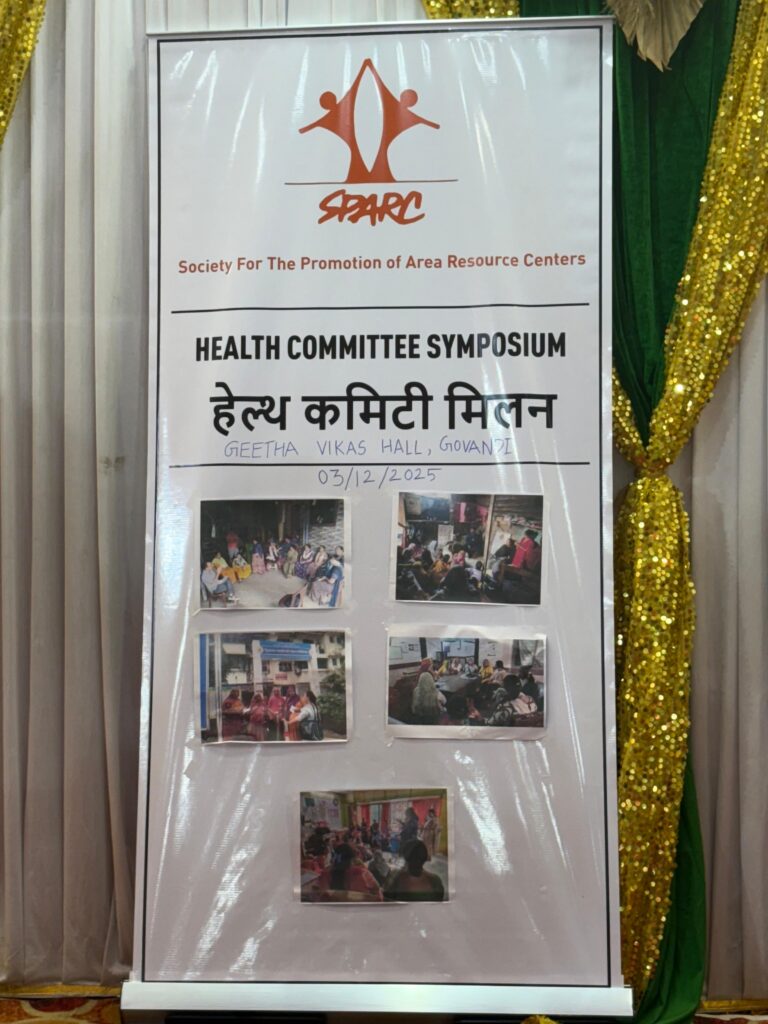
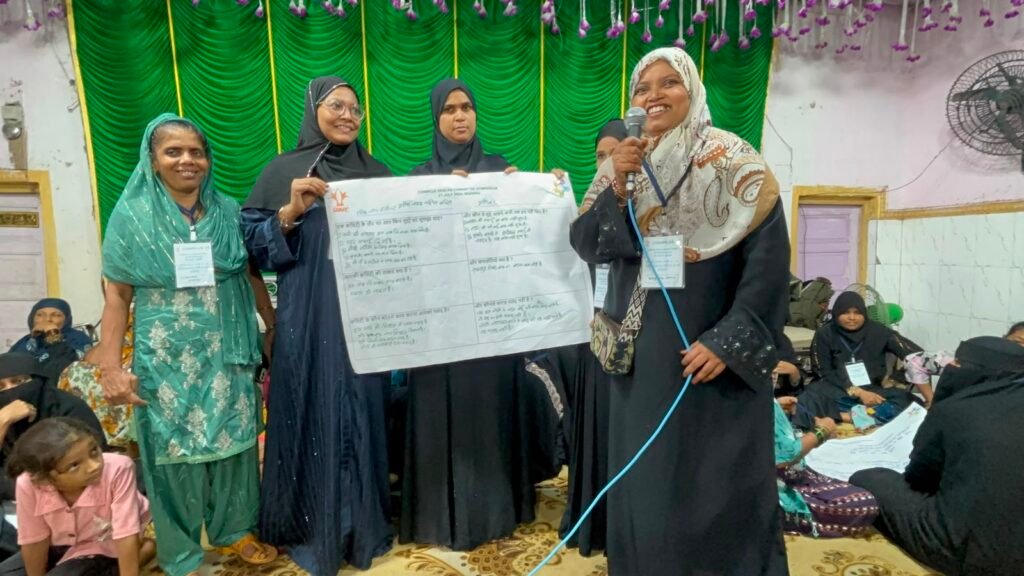
Community health committee symposium

Since 2023, SPARC began sharpening and deepening its focus on health via exploring the idea of creating community health committees and strengthening them over time to take up health action in their neighborhoods. The action has a simple goal, the neighborhood insights and knowledge around elements of health and its social determinants of health are deepened. Communities learn which are the set of things for good health that they can do themselves within their neighborhoods and which things require seeking accountability from their duty bearers. All activities around capacity building engage the committees in an action learning fashion where they learn by being active participants in the process.

Community health committee symposium Read More »

Scroll to Top